
Discover NZ long-run roofing standards: minimum roof pitch tips, profile choices, and install must-knows. See Johnson Roofing’s projects and get advice.
Choosing long-run steel for a Kiwi home means getting the minimum roof pitch right—it’s just as important as the profile and colour. Pitch affects how quickly rain sheds, how well wind-driven rain is resisted, and whether your warranty conditions are met.
Below is a practical, homeowner-friendly guide to help you talk confidently with your roofer.
Why Pitch Matters in New Zealand’s Weather Window
Aotearoa’s climate throws plenty at a roof—sudden downpours, coastal salt, and gusty sou’westers. Minimum pitch is set so water sheds fast, avoiding ponding, capillary action, and blow-back; go too shallow and you risk leaks at penetrations, wind flutter, and early coating wear. Aim a touch steeper than the minimum for better drainage, longer service life, and fewer post-storm call-backs.
Profile-by-Profile: What “Minimum” Usually Means
Every manufacturer publishes its own tables, and architects or installers should always check those first. Still, it helps to know the broad ranges you’ll hear on site:
• Corrugated (classic wavy profile): Common on villas and baches, corrugated needs a moderate roof pitch so shallow troughs and exposed fixings shed heavy rain fast and reduce capillary creep at side laps.
• Trapezoidal/ribbed sheets: Deeper pans and ribs let these profiles use lower pitches than corrugated while still shedding water, and their stiffness reduces oil-canning on long spans—ideal for open, windy sites.
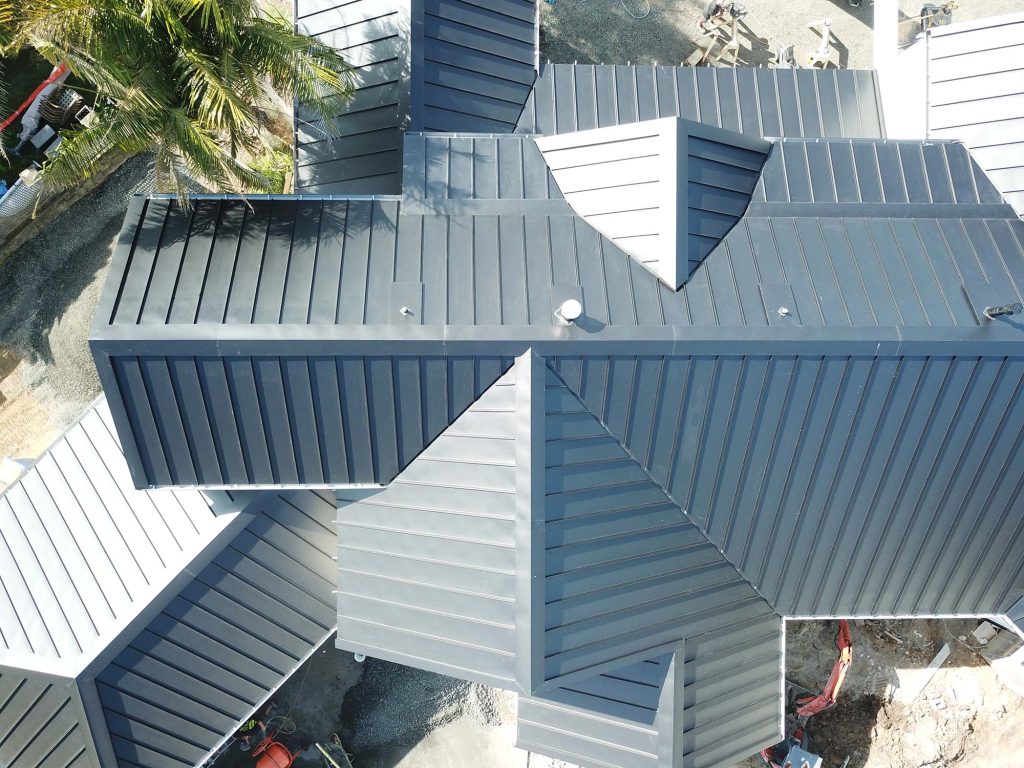
• Concealed-fix (clip-fastened) profiles: Built for low-slope roofs, these clip-lock systems avoid through-fixings, reduce penetrations, and resist wind-driven rain at shallow falls—ideal for sleek, modern lines.
• High-rib commercial profiles: On long spans or light industrial builds, high-rib options can manage large catchments and low falls, provided gutters and overflows are sized correctly.
• A simple rule of thumb: Bigger ribs and deeper pans can allow a lower minimum roof pitch, but follow the manufacturer’s details and consider wind zone and sheet length (longer roofs often need more fall).
Getting Minimum Roof Pitch Right on Site (The Bits People Forget)
Matching the profile to the minimum roof pitch is step one. These installation realities are where projects succeed or fail:
• Sheet length vs fall: Longer runs need careful set-out to maintain a consistent fall. A few millimetres out at the ridge can become a pond at the gutter.
• Underlay and ventilation: Breathable underlay and adequate airflow help manage condensation—especially important on lower pitches where drying is slower.
• Flashings and penetrations: The shallower the fall, the fussier the detailing. Expect longer flashings, back-trays, and specific pipe/vent boots rated for low-pitch roofs.
• Gutter capacity and overflows: Low-pitch roofs deliver water more “flat-out” during cloudbursts. Ensure gutters, sumps, and emergency overflows are sized to NZ rainfall intensities, not yesterday’s averages.
• Fastener choice and placement: Correct screw length, washer quality, and spacing are crucial—more so as the pitch drops and water lingers a touch longer near fixings.
• Warranties and paperwork: Keep the data sheets. If the minimum roof pitch is 3° on paper, installing at 2.5° can void a finish or weathertightness warranty.
Your Next Step: Let’s Make Your Roof Storm-Ready
You don’t have to navigate all this alone. Johnson Roofing is an Auckland team focused on durable, high-quality long-run roofing—handling residential and commercial projects with licensed installers who follow manufacturer specs to the letter and finish with tidy detailing that stands up to real weather.
Have a look at our recent projects to see the finish and care we bring to every job, then explore our services to find the best fit for your home—new roof, re-roof, or maintenance. When you’re ready, contact us for advice, a site check, and a clear, no-surprises quote.
Related Blog Articles:
Long Run Steel Roofing: Why It’s Ideal for NZ Homes and Businesses
Auckland Metal Roofers: Metal Roofing Guide for Modern Homes