
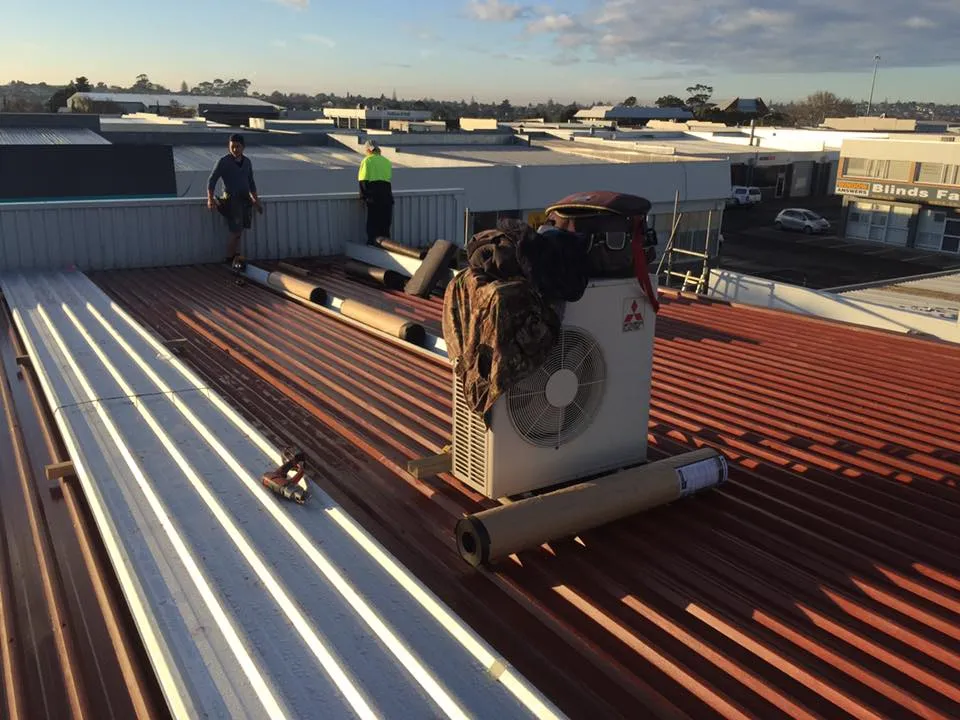
Rusted metal roof replacement Auckland property owners can arrange with Johnson Roofing starts with an assessment of corrosion and leaks.
Replacement becomes practical when corrosion is widespread, roof sheets have perforated or leaks continue after targeted repairs. Anyone comparing rusted metal roof replacement in Auckland needs an assessment of the entire roofing system before proceeding.
When Is Rusted Metal Roof Replacement in Auckland the Right Decision?
Surface staining or an isolated defect does not automatically mean the roof requires replacement. However, patching becomes difficult to justify when corrosion has reduced the integrity of multiple sheets or affected fixings, laps, flashings and gutter edges.
Warning signs that warrant a professional assessment include:
- Perforated roofing: Rust holes or thin, weakened metal appear across several sheets.
- Recurring leaks: Water enters through different areas despite previous repairs.
- Corroded fixings: Screws are loose, lifting or surrounded by deteriorating metal.
- Failing flashings: Corrosion affects valleys, ridges, wall junctions or penetrations.
- Internal damage: Water has reached ceiling linings, insulation or roof framing.
Our article about when roof repairs can delay a full re-roof explains why localised defects may remain repairable. Where failures are no longer isolated, rusted metal roof replacement in Auckland may be more defensible than another temporary patch.
Why Widespread Corrosion Requires More Than Patching
A patch only treats the area included in its scope. It cannot restore metal that has become thin across the roof or correct several ageing components likely to fail at different times. Repeated access and repair costs may also increase without producing a dependable long-term result.
Coastal exposure needs careful consideration when selecting the replacement system. The New Zealand Metal Roofing Manufacturers Association’s corrosion guidance explains how marine environments, fastener compatibility, exposed cut edges and unwashed areas can influence corrosion. We consider the property’s location, roof design and exposure when defining the scope without assuming one product suits every site.
What Should the Replacement Scope Include?
Our re-roofing service covers removing and disposing of the existing roof, ordering materials and installing replacement steel roofing. Because the building may be temporarily exposed during the work, we monitor weather conditions and adjust plans where required.
A clear quotation should identify:
- Removal: Existing roofing included for removal and disposal.
- Materials: Proposed roofing profile, material and finish.
- Components: Underlay, fixings, flashings and other included items.
- Site access: Access requirements and protection of occupied areas.
- Hidden defects: Allowances or procedures for concealed substrate damage.
- Programme: Timing assumptions, weather delays and scope exclusions.
Consent requirements should be established before materials are ordered or the existing roof is removed. Some replacements may be exempt, while premature failure, structural alterations or a changed roofing system can require closer review. Our Auckland re-roofing consent guide outlines the questions owners should resolve.
Arrange an Assessment Before Corrosion Spreads
Delaying replacement can expose ceilings, insulation and timber to further water entry, but the decision should follow evidence rather than guesswork. We assess the roof, review its corrosion and leak history, and define the work required for Auckland homes and commercial buildings.
Send Johnson Roofing your property address, approximate roof age, leak history and clear photographs through our roofing enquiry page. We can arrange a no-obligation assessment and prepare a quote based on the roof’s actual condition.