
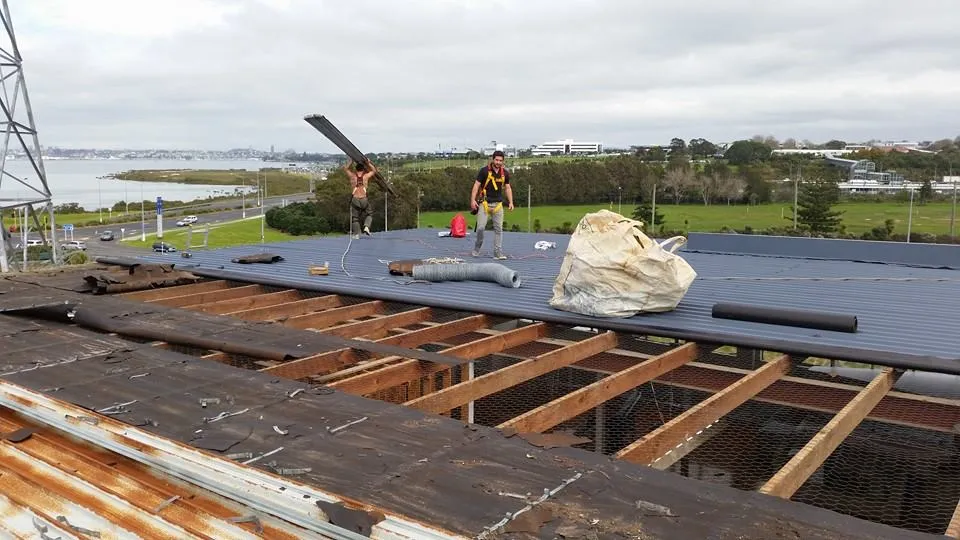
Ongoing roof repairs can delay reroofing when damage remains localised, and the existing roof still has a serviceable, repairable substrate.
Maintenance is not a permanent substitute for replacement. Its value depends on identifying isolated defects early, correcting their cause and monitoring whether the wider roof continues to perform.
When Can Roof Repairs Extend a Roof’s Useful Life?
Roof repairs are most defensible when an inspection finds limited faults rather than widespread material deterioration. Examples may include an isolated flashing defect, a small number of damaged tiles, loose fixings or a localised leak with no extensive substrate damage.
Johnson Roofing provides roof maintenance in Auckland and recommends periodic inspection and upkeep. Prompt work can reduce the time water remains in contact with insulation, linings and timber, but no repair can guarantee that hidden damage is absent.
What Should Be Checked Before Repair Is Approved?
A useful assessment should consider the roof as a system rather than pricing the visible defect alone.
Extent of corrosion or material breakdown: Scattered surface deterioration may be manageable, while perforation across multiple sheets may indicate that repair will only defer an unavoidable reroof.
- Condition of flashings and penetrations: Junctions around walls, valleys, vents, chimneys and skylights require compatible materials and sound detailing.
- Fixings and supporting substrate: Replacement fasteners will not solve decay, damaged battens or enlarged fixing holes beneath the cladding.
- History of recurring leaks: Repeated call-outs in different areas can indicate system-wide ageing rather than one repairable fault.
- Future work: Planned solar installation, extensions or major insulation work may affect whether repairing now remains commercially sensible.
The New Zealand Government advises owners to check roofs, gutters and flashings and arrange repairs promptly as part of controlling moisture and damp.
When Is Reroofing the Better Decision?
There is no reliable universal rule stating that repairs become uneconomic at 40 per cent of a replacement quote. The decision depends on expected repair life, defect distribution, roof age, warranty implications, access costs and the likelihood of further failures.
Johnson Roofing’s Auckland reroofing service includes removing and disposing of the existing roof, ordering materials and installing the replacement steel roof. Reroofing deserves serious consideration when leaks recur, corrosion is widespread, or the existing roof can no longer accept durable repairs.
Turn the Inspection into a Repair-or-Replace Plan
Ask for photographs, defect locations, proposed work and limitations to be recorded. A repair plan should state what will be corrected and what remains outside scope. That makes future inspections more useful and prevents temporary patching from being mistaken for permanent renewal.
The quotation should also identify access requirements, waste removal, matching material availability, and any areas that cannot be assessed before work starts. Where repair is chosen, agree on a realistic review date. This makes the decision measurable: the owner can compare the roof’s condition, leak history and maintenance cost rather than repeatedly authorising isolated work without a longer-term plan.
Send Johnson Roofing the property address, roof type, approximate age, leak history and clear photographs through the roofing enquiry page. The team can inspect the roof and explain whether targeted repairs or planned reroofing is the stronger next step.