
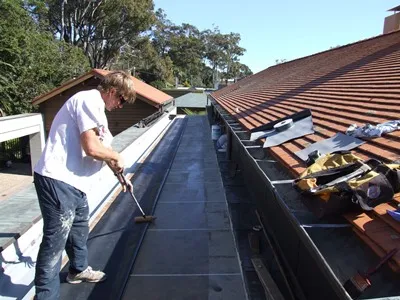
Butynol roof replacement in Auckland: how to tell a repairable membrane from a failing one, and when long-run steel suits the roof.
A single puncture or lifted seam does not automatically mean a new roof. Before you commit to Butynol roof replacement in Auckland, it helps to know whether the membrane is failing across the roof or only needs a targeted repair.
Is Your Butynol Roof Failing or Does It Only Need Repair?
ARDEX describes Butynol as a synthetic rubber membrane, and a membrane specialist is the right person to judge whether a particular defect can be repaired. What we can help with is the next question, which is whether the roof suits conversion to long-run steel through our re-roofing service. These signs help show the difference:
- Localised punctures: Small cuts from tools, fixings or earlier maintenance may be repairable if the surrounding membrane is sound.
- Lifted seams: One damaged lap can let water in. Seam separation across the roof points to a bigger problem.
- Bubbles or delamination: Raised areas can mean lost adhesion or trapped moisture. Widespread delamination makes patching unreliable.
- Ponding water: Standing water after rain can come from blocked outlets, poor falls or substrate movement. The cause needs fixing, not covering with another patch.
- Recurring leaks: Leaks that return after several repairs can point to damaged substrate or failed detailing in more than one area.
What Does Butynol Roof Replacement in Auckland Involve?
Swapping a membrane for steel is more than laying new sheets over the old surface. The structure, pitch and drainage all need checking first, and the right approach depends on the individual building.
- Roof inspection: We look at the membrane, seams, penetrations, parapets, outlets and past repairs for likely failure points.
- Pitch check: The roof must meet the minimum pitch for the chosen long-run profile. A genuinely flat roof may need redesign, or may be better left as a membrane.
- Membrane removal: Where it is required, removing the old membrane lets the substrate and framing be checked for concealed damage.
- Substrate repairs: Wet, soft or rotten materials need repair or replacement before any steel goes on.
- Steel installation: The underlay or condensation-management approach, fixings, flashings and drainage must suit the building. Moisture management needs to be designed, not assumed.
When Is Long-Run Steel the Right Choice, and When Is It Not?
For Butynol roof replacement in Auckland, steel can make sense when membrane defects are widespread, repairs no longer hold and the roof has enough pitch to shed water. It tends to suit simple roof planes where long sheets carry rainwater to the spouting.
It may not suit a near-flat or trafficable roof, or one with many penetrations and parapets. In those cases a properly specified membrane may remain the better waterproofing choice, and we will tell you if that is the case.
Discuss Your Roof Replacement Options
At Johnson Roofing, we replace roofs across Auckland, including removal of the old roofing and installation of new metal roofing. Bring your repair records and leak photographs so we can discuss a realistic scope for Butynol roof replacement in Auckland.
Contact us to arrange a no-obligation assessment and talk through your roof’s pitch, access and drainage. A clear history of repairs and leaks helps us advise whether repair or replacement makes more sense.