
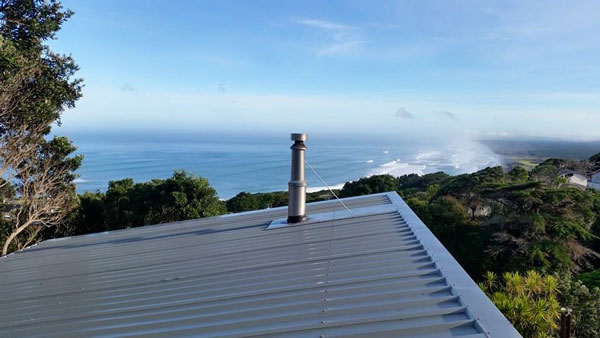
Roof flashing repairs around chimneys and skylights should follow accurate leak tracing, compatible material selection and buildable detailing.
Johnson Roofing already has broad flashing articles, so this version concentrates on diagnosing leaks at two complex penetrations rather than repeating general advice about damaged flashing.
Why Are Chimneys and Skylights Complex Leak Locations?
Both interrupt the roof’s normal drainage plane. Their junctions may include apron, side, head, back-pan, saddle or proprietary flashing components, depending on the roof profile and penetration design. Water must be directed around the obstruction while allowing for material movement and adequate laps.
Johnson Roofing’s metal roof flashing guidance explains relevant installation principles. However, a ceiling stain near a skylight or chimney does not prove the nearest flashing is responsible. Water may travel from an upslope defect before becoming visible.
What Should Be Inspected Before Repairing the Flashing?
Leak tracing should examine the entire junction and surrounding roof area.
- Upslope drainage: Debris, ponding paths and inadequate back-pan or cricket arrangements can direct excessive water towards the penetration.
- Laps and upstands: Dimensions and sequencing must suit the roof profile, pitch, exposure and applicable compliance method.
- Material compatibility: Flashing, cladding, fasteners and sealants must not create avoidable corrosion or premature coating damage.
- Movement and fixing: Thermal movement, loose fixings and rigid sealant joints can open pathways that were not visible when installed.
- Skylight components: Condensation, failed glazing seals or proprietary frame components may cause symptoms that roofing sealant cannot correct.
- Chimney condition: Masonry cracks, caps and wall interfaces should be considered alongside the metal roof flashing.
New Zealand’s Building Performance guidance notes that most leaks are associated with junctions and penetrations and that E2/AS1 provides details for common roof situations. See the official E2 external-moisture overview.
Is Sealant a Durable Flashing Repair?
Sealant may form part of a compliant detail, but surface application is not automatically a permanent repair. It should not replace missing laps, insufficient upstands, incompatible metals or a failed proprietary component. The existing assembly and cause of failure must be identified first.
The repair scope should state whether flashing will be resealed, locally replaced or redesigned. It should also identify any consequential damage that falls outside the roofer’s work.
Reduce Repeat Call-Outs with Better Evidence
Photograph the roof junction and internal stain, record when leakage occurs and note wind direction if the problem appears only during driven rain. Previous repair details are valuable because repeated sealant applications may conceal the original configuration.
Johnson Roofing provides roof maintenance and repair assessment for Auckland properties. No responsible contractor should promise that every junction will remain weatherproof for years without first inspecting the site.
A useful quotation should identify the suspected entry path, proposed flashing components, material specification, access method and exclusions. It should state whether surrounding roof sheets, skylight parts or chimney masonry require separate work. This level of detail gives the owner a basis for comparing proposals and reduces the likelihood of another surface patch being mistaken for a complete repair.
Send the address, roof profile, penetration type, photographs and leak history through the Johnson Roofing contact page. That evidence supports a more accurate flashing repair scope and a more useful quotation.