
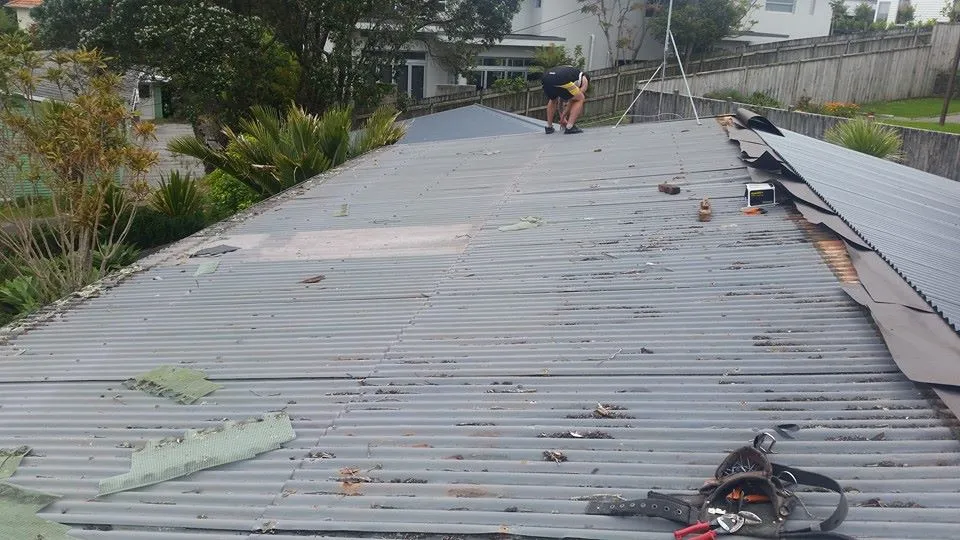
Metal roof condensation requires accurate diagnosis of indoor moisture, extraction, insulation and roof-space conditions before solutions are selected.
Unlike a general discussion of trapped moisture damage, this article explains how condensation is distinguished from rainwater entry and how corrective work should be prioritised.
What Causes Metal Roof Condensation?
Condensation forms when moisture-laden air contacts a surface below its dew-point temperature. In a roof space, the risk is influenced by indoor humidity, air leakage through the ceiling, roof-space temperature, insulation arrangement, underlay and the building’s capacity to dry.
Common moisture sources include cooking, showers, clothes drying, unflued gas heaters and extraction ducted into the roof cavity. The New Zealand Government recommends venting household moisture outside rather than allowing it to accumulate around insulation and roof structures.
Is It Condensation or a Roof Leak?
Symptoms provide clues, not a final diagnosis.
- Timing: Moisture after rain suggests external water entry, while droplets after cold, clear conditions may point towards condensation.
- Distribution: A localised stain near a penetration may indicate a leak; widespread underside dampness can indicate moisture accumulating throughout the cavity.
- Roof condition: Corroded fasteners, damaged sheets or failed flashings increase the likelihood of external water entry.
- Extraction and indoor humidity: Fans terminating in the cavity or consistently high household humidity strengthen the condensation hypothesis.
- Underlay and insulation: Gaps, damage, compression and blocked drying paths can affect how the roof assembly manages moisture.
Water can travel, and condensation can occur alongside a roof leak. Johnson Roofing’s article on winter metal-roof leaks provides related context, but an on-site inspection remains necessary.
Which Solutions Should Be Considered First?
Start by reducing moisture at its source. Confirm bathroom, kitchen and dryer exhausts discharge outdoors. Check plumbing leaks, indoor humidity and unflued heating. Roofing defects should be repaired using compatible materials and appropriate detailing.
Roof-space ventilation may assist moisture management in some buildings, but it must be assessed against roof type, ceiling configuration, underlay, insulation and climatic conditions. A universal 25-millimetre gap or automatic eave-to-ridge retrofit should not be prescribed without design evidence.
If underlay, insulation or timber has been persistently wet, the affected materials may need separate assessment. Johnson Roofing should describe only the roofing work it is qualified and contracted to perform.
What Should an Inspection Record?
Useful evidence includes when moisture appears, recent weather, indoor humidity sources, extraction routes, roof condition and photographs from the cavity. This helps prevent an expensive ventilation installation being used to mask a flashing defect—or repeated leak repairs being used against an internal humidity problem.
Johnson Roofing provides roof maintenance across Auckland and can inspect roof components that may be contributing to moisture entry.
Corrective work should be staged by cause. Stop external water entry and incorrectly discharged extraction first, then assess whether wet materials can dry or require replacement. Consider designed roof-space ventilation only after the moisture load and existing assembly are understood. This order reduces the risk of paying for a ventilation product while the actual defect remains unresolved.
Use the roofing enquiry form to send the property address, roof profile, approximate age, symptom timing and photographs. A documented inspection is the correct starting point for selecting a proportionate response.