
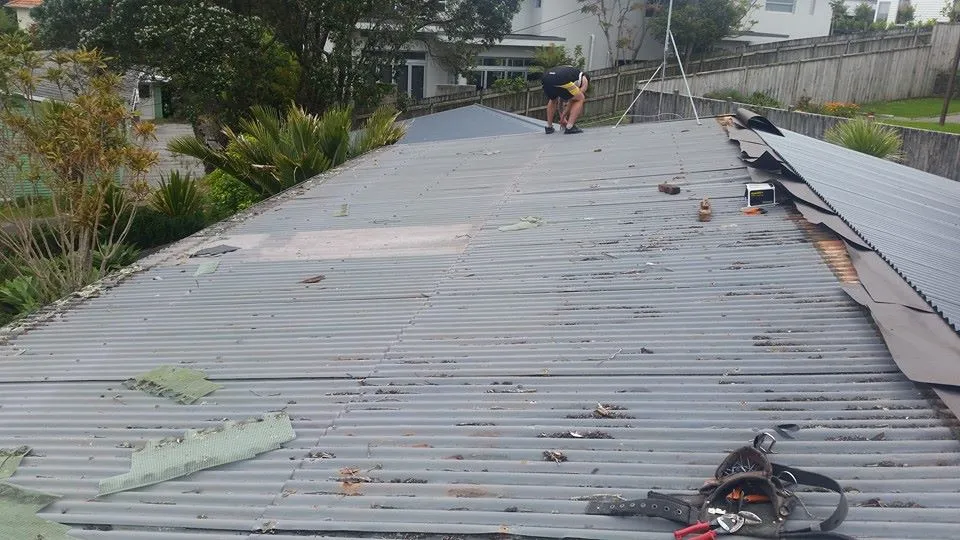
Johnson Roofing explains metal roof fastener problems causing leaks, loose sheets, and movement in Auckland residential and commercial roofing systems.
Metal roof fastener problems can allow water through fixing penetrations and reduce how securely sheets remain restrained. Causes include incorrect installation, unsuitable fasteners, deteriorated washers, corrosion and loss of grip in the supporting material.
What Causes Metal Roof Screws to Leak or Loosen?
Exposed-fix metal roofing relies on screws and sealing washers suited to the roof profile and substrate. A screw driven too tightly may deform or split its washer, while an underdriven or angled screw may leave an incomplete seal. The wrong length, thread, material or corrosion classification can also undermine performance.
The New Zealand Metal Roofing Manufacturers Code of Practice states that roofing screws require adequate penetration and compatible sealing washers. It also specifies environmental corrosion classes and requirements for screws engaging with timber or steel. Manufacturer requirements still apply to each roof system.
Potential fastener defects include:
- Overdriven screws: Excessive compression can damage the washer or deform the sheet around the fixing.
- Underdriven screws: Insufficient compression may leave a route for water beneath the screw head.
- Angled installation: A screw that is not seated correctly can create uneven washer contact.
- Incorrect specification: Unsuitable length, thread, coating or material can reduce grip or accelerate corrosion.
- Deteriorated washers: Split, hardened, displaced or missing washers may no longer seal the penetration.
- Enlarged fixing holes: Repeated sheet movement can widen holes and prevent a replacement screw from gripping correctly.
How Metal Roof Fastener Problems Affect Sheet Movement
Metal sheets naturally expand and contract with temperature changes. Fasteners, sheet lengths, support spacing and installation details must suit the roof system’s design. When fixings become loose, corroded or poorly seated, sheets may rattle, lift locally or move around fixing points.
These symptoms do not prove that every screw need replacement. They may also indicate damaged sheets, inadequate support, installation errors or wind-loading concerns. Our article on metal roof inspections in Auckland explains other warning signs to review alongside the fasteners.
When Should We Inspect the Fasteners?
Arrange an inspection when water stains, visible corrosion, raised screws or unfamiliar roof noise appears. A safe inspection should assess the surrounding roof rather than applying sealant over every suspicious screw. We look for:
- Leak patterns: Interior staining may relate to fasteners, but water can travel from flashings, laps or penetrations.
- Corrosion: Rust around screw heads or holes may affect both the fastener and roof sheet.
- Loose sheets: Movement during wind requires assessment of the fixings, profile and supporting substrate.
- Distorted cladding: Ripples or depressions around screws may indicate incorrect installation or movement.
- Previous sealant patches: Patching can conceal the defect without restoring secure fixing or washer compression.
Our roof maintenance service can identify accessible fastener deterioration and related roofing defects. Do not tighten or replace screws from an unsafe position. Walking on metal roofing can damage sheets and create fall hazards.
Repair the Cause, Not Only the Visible Screw
A repair depends on what failed. It may involve replacing selected fasteners with compatible products, addressing enlarged holes, repairing sheets or correcting another leak source. Widespread corrosion or repeated fixing failure may justify a broader repair or re-roofing assessment.
Metal roof fastener problems should be assessed before loose fixings lead to recurring water entry or further sheet damage. We provide roofing services across Auckland for residential and commercial metal roofs and explain the recommended scope clearly.
Book a Metal Roof Fastener Inspection
Do not keep sealing the same screw lines without identifying why they are failing. Contact us to arrange a no-obligation inspection and receive practical advice for your Auckland metal roof.