
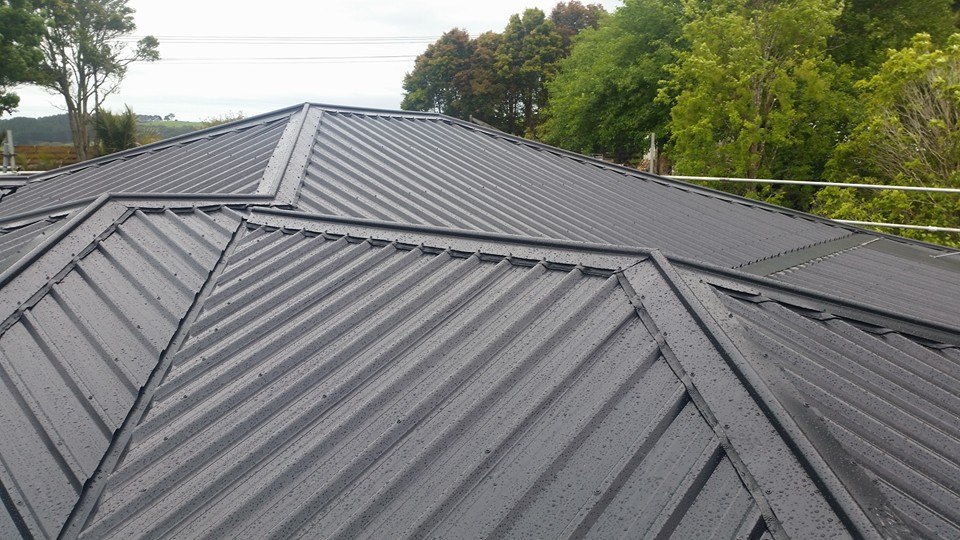
Johnson Roofing offers coastal roofing in Auckland with corrosion-resistant roofing materials suitable for salt exposure and long-term coastal durability.
Choosing coastal roofing in Auckland is not a matter of selecting the material with the strongest marketing claim. The roof must be specified for the property’s actual exposure, including salt-laden wind, shelter, rainfall, roof geometry and areas that rain cannot naturally wash.
We assess the complete roofing system, not only the sheets, because incompatible fasteners, flashings or drainage components can undermine an otherwise suitable coastal roof.
What Does Salt Exposure Change?
Salt particles carried by wind can settle on roof sheets, fixings, flashings, gutters and sheltered junctions. When moisture is present, those deposits increase the conditions that support corrosion. BRANZ guidance on metal corrosion explains how marine salts affect metal building components and why exposure conditions matter.
Distance from the shoreline is only one consideration. A home beside open surf may face different conditions from a property near a harbour or estuary. Prevailing wind, surrounding buildings, trees, roof pitch and unwashed areas beneath eaves or other structures can also change the exposure.
How We Select a Coastal Steel Roofing System
There is no single product that suits every coastal Auckland property. The correct approach is to assess the site and use a New Zealand steel roofing product, coating and component specification approved for that exposure. If an ageing roof is corroding or leaking, our Auckland re-roofing service can establish whether repair remains practical or replacement is the better option.
A coastal specification should address:
- Exposure and product suitability: The selected steel product and coating must match the site conditions and the manufacturer’s published requirements.
- Fastener compatibility: Screws, washers and other fixings must suit both the roofing material and the relevant exposure environment.
- Flashings and penetrations: Valleys, ridges, vents, skylights, chimneys and wall junctions need compatible materials and careful detailing.
- Unwashed areas: Eaves, overhangs and other rain-sheltered surfaces may retain salt and require planned cleaning.
- Drainage components: Gutters and downpipes should allow water to drain effectively and must not trap salt, leaves or persistent moisture.
- Warranty conditions: Product warranties can depend on location, exposure, installation and ongoing maintenance. Our guide to ZINCALUME® roofing in Auckland explains why product limits must be checked before selection.
Why Installation Details Matter
Coastal performance depends on the roof acting as one compatible system. Substituting an unsuitable fastener, mixing incompatible metals or leaving swarf on completed roofing can create local corrosion points. Flashings should receive the same attention as the main sheets because edges and penetrations are common locations for trapped moisture and debris.
Workmanship cannot turn an unsuitable product into the right coastal solution. Equally, a suitable product can still perform poorly if installation details or manufacturer requirements are ignored. We plan the scope around the property rather than applying one coastal specification to every Auckland home.
Maintenance Is Part of Coastal Roof Ownership
A coastal roof is not maintenance-free. Periodic inspections and cleaning help remove salt and debris, identify coating damage and address early corrosion before it spreads. Our roof maintenance service can support ongoing checks based on the roof’s condition and exposure.
Property owners should also keep gutters clear and follow the roofing manufacturer’s cleaning and maintenance instructions. These actions support service life, but they do not justify a guaranteed durability claim because every site and roof system is different.
Arrange a Coastal Roofing Assessment
We can assess your Auckland property, review its exposure and recommend a steel roofing system suited to the roof design and coastal conditions. Request a roofing assessment for a clear, property-specific scope and quote.